
Hello, there! And thank you for visiting my new blog! Here at Bauer Piano Service, I believe in providing my customers with only the best piano repair, tuning, and appraisal services. In order to help even more people, I thought I’d share some of my know-how in this blog so that more people can benefit from the insights and breakthroughs that took me years to learn!
The average piano has 220 strings. Each string has a different pitch and frequency and must be tuned to the other strings on the piano. These strings determine the sound quality of your piano, so caring for them properly is essential. Over time these strings can stretch due to tension, which causes the piano to go out of tune. Pianos are easier to tune, stay in better condition, and maintain their value more easily when they are tuned regularly. Regular tuning also prevents damage that can occur when someone plays overstretched strings. If a piano hasn’t been tuned for a while, it will be more expensive and time consuming to get the piano back into tune. If a piano hasn’t been tuned in a long time, a piano tuner might try to bring the piano back in tune by raising the pitch of the piano. This involves pulling all the strings tight, which makes the pitch sharp. This overcompensation will hopefully cause the piano to be in tune when the strings naturally stretch over time, causing the pitch to go flat. If you need to raise the pitch on your piano, it is important to have follow-up tunings since extra tension is added to the strings. To make the strings on your piano last as long as possible, you should have the piano checked every six months to a year. If the strings deteriorate too much, or if the strings are out of tune and not actively used, then the piano may have to be restrung, which can sometimes cost as much as buying a new piano. The cost of a tune-up can range from $100 to $200, but in the long run, it takes less money to tune a piano every six months than it does to fix a piano that hasn’t been tuned for several years. If you have a new piano, you should tune it four times during the first year, because the new strings will stretch more and go out of tune faster. If you tune your piano regularly in the early years of ownership, your piano will be more likely to stay in tune for longer periods of time and during the later years of its life. It is important for those learning to play the piano to have an instrument that is in tune so they can correctly learn the pitches. If a piano player learns to play with incorrect pitches, it will hinder his or her ability to play a tuned piano, because the pitch will sound off to them. Regular piano tuning can give those who are learning to play the piano a boost of confidence, because it’s exciting to play a piano that is in tune and sounds good. Having an in-tune piano helps kids stick with the piano and enjoy learning to play it. It’s hard to be motivated to learn to play the piano when you don’t know if you are making a mistake or if the piano is just out of tune. If you properly care for your instrument, it will bless your life for years to come. Original article: https://www.deseretindustries.org/blog/why-its-important-to-tune-your-piano
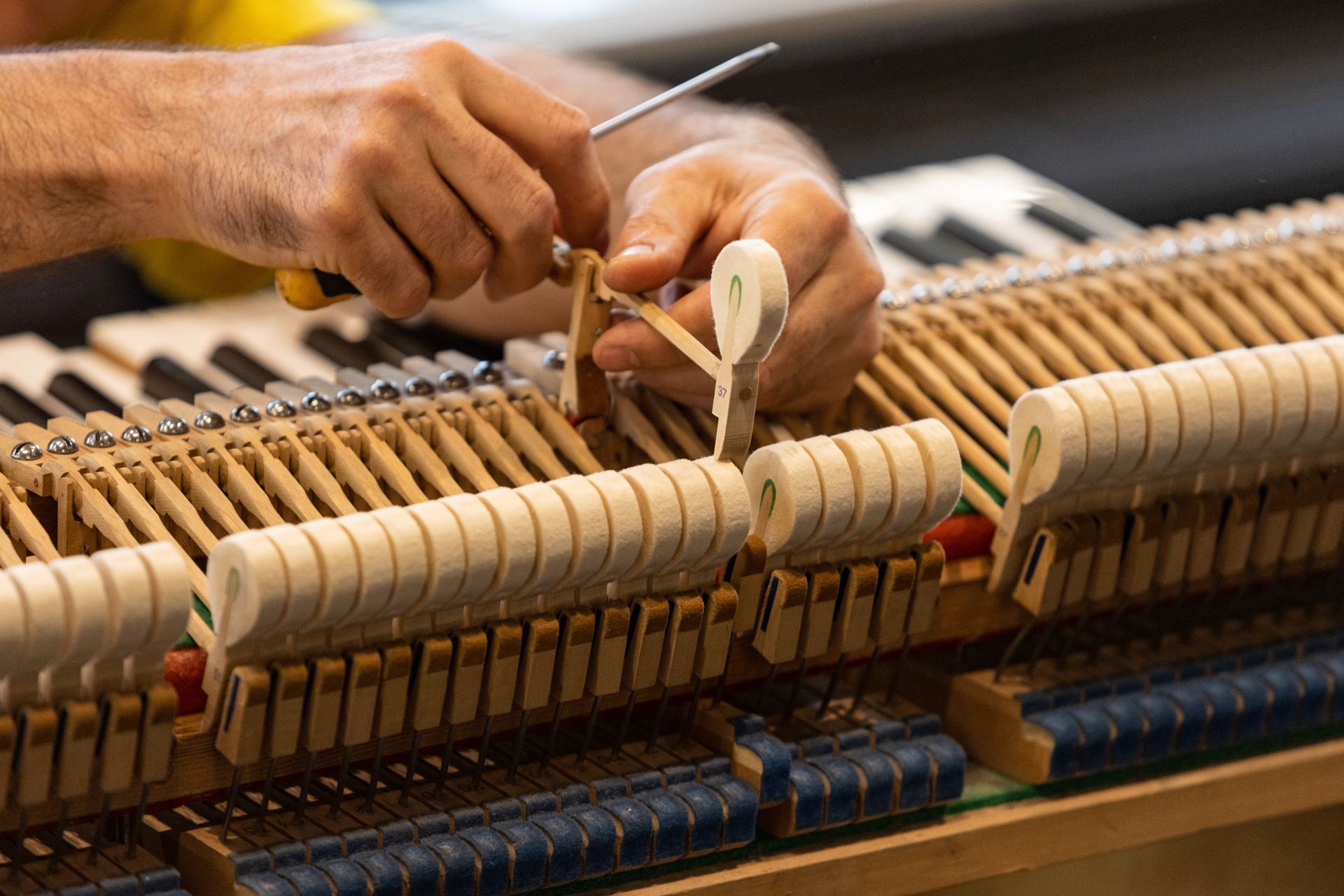
A piano is a stringed musical instrument that produces sound when its strings are struck by hammers. The strings, which are made of steel or other metals, are stretched tightly across a wooden frame called the soundboard. The strings are tuned to specific pitches by adjusting the tension on them. The piano has a keyboard that consists of white and black keys. The white keys are the natural notes and the black keys are the sharps and flats. When a key is pressed, a hammer strikes the corresponding string, causing it to vibrate and produce sound. The hammer is then lifted off the string by a felt damper, stopping the sound. A piano is tuned by adjusting the tension on the strings, which changes the pitch of the notes. This is done by turning the tuning pins, which are located at the back of the piano. The pins are tightened or loosened to increase or decrease the tension on the strings. The process of tuning a piano is called "pitch raising" or "pitch lowering" and it can be done with a tuning hammer or a tuning lever. The process of tuning a piano is a delicate and precise task, it takes a skilled and experienced piano tuner to accomplish it. Piano tuning is an art that requires a good ear and a deep understanding of the instrument. It's usually recommended that pianos should be tuned at least once a year, but depending on the environment and usage, more frequent tuning may be necessary. Regular tuning is essential for optimal performance, sound quality, and longevity of your piano. It can also help to improve your playing experience and maintain the value of your investment. Trusting your piano to an experienced professional like Bauer Piano Service will give you peace of mind knowing that your piano is in good hands. Here are a few reasons why it's important to keep your piano tuned regularly: 1. Sound Quality: A piano that is out of tune will not produce the rich, full sound that it is capable of. Regular tuning will ensure that your piano sounds its best and provides a pleasant listening experience for both the performer and the audience. 2. Pitch Stability: As a piano is played, the tension on the strings changes, causing the pitch to drift out of tune. Regular tuning helps to maintain the piano's pitch stability, so that it stays in tune for longer periods of time. 3.Action Regulation: A piano's action, or the mechanism that transfers the player's finger movements to the hammers that strike the strings, can become worn or misaligned over time. Tuning also includes action regulation to make sure the piano plays smoothly and efficiently. 4. Humidity and Temperature Changes: Pianos are sensitive to changes in humidity and temperature, which can cause the wood to expand and contract, affecting the tension on the strings. Regular tuning can help to mitigate the effects of these changes and keep the piano in good condition. 5. Maintenance: Regular tuning is a form of maintenance that can help to prolong the life of your piano. It can help to identify and address any potential issues before they become major problems. 6. Investment: A piano is a significant investment, and regular tuning helps to maintain its value. A well-maintained piano will hold its value better than one that has been neglected. 7. Playing Experience: Playing an out of tune piano can be frustrating and disheartening for a musician. Keeping your piano in tune will make it more enjoyable to play, and can help to improve your performance. 8. Consistency: If you are using your piano for performance or recording, consistency is key. Keeping your piano in tune ensures that your music will sound the same every time you play it. It is important to choose a reputable and experienced piano tuner to ensure that your piano is properly tuned and maintained. A poorly tuned piano can not only affect the sound quality and performance, but it can also cause damage to the instrument over time. A professional piano tuner has the knowledge and skills to properly tune and maintain your piano, and can also identify and address any potential issues before they become major problems. Bauer Piano Service is a reputable and experienced piano tuning and repair service in Baltimore with 29 years of experience. They have the expertise to tune and repair pianos to the highest standards, ensuring that your piano will sound its best and last for many years to come. Trusting your piano to an experienced professional like Bauer Piano Service will give you peace of mind knowing that your piano is in good hands. It's obvious that regular piano tuning is essential for optimal performance, sound quality, and longevity of your piano. It can also help to improve your playing experience and maintain the value of your investment. It's recommended that pianos should be tuned at least once a year, but depending on the environment and usage, more frequent tuning may be necessary. Always trust a professional piano tuner to do the job.